
Postpartum Recovery: How Osteopathy Can Help (Beyond the Basics)
Postpartum recovery is often reduced to a short checklist: rest, pelvic floor rehab, and a gradual return to activity. In reality, recovery is more complex. Many symptoms that appear weeks or months after birth are not directly linked to “weakness,” but to subtle mechanical adaptations the body made during pregnancy and delivery.
This is where osteopathy can be particularly relevant—not as a generic wellness approach, but as a way to address specific, often overlooked dysfunctions.
The Hidden Mechanics of Postpartum Pain
One of the most underestimated factors in postpartum recovery is how the body redistributes load after birth.
During pregnancy, the diaphragm shifts upward, rib mobility decreases, and breathing patterns often change. At the same time, the pelvis adapts to increased ligament laxity under the influence of relaxin. These changes don’t automatically reverse after delivery.
As a result, many women develop compensation patterns such as:
- Reduced rib cage expansion → increased neck and shoulder tension
- Altered diaphragm function → poor core coordination
- Pelvic asymmetry → persistent lower back or sacroiliac pain
A 2018 study published in Musculoskeletal Science and Practice highlighted how altered motor control and load transfer persist postpartum, particularly between the diaphragm, abdominal wall, and pelvic floor. This is important because these structures don’t work in isolation—they function as a coordinated system.
Why “Strengthening” Alone Is Sometimes Not Enough
Postpartum rehab often focuses on strengthening the pelvic floor and deep core muscles. This is essential, but it assumes that the system is already functioning correctly.
In practice, many patients struggle to activate these muscles effectively—not because they are weak, but because the surrounding structures are restricted.
For example:
- If the rib cage lacks mobility, the diaphragm cannot descend properly
- If the pelvis is not moving symmetrically, load transfer becomes inefficient
- If fascial tension is present, muscle activation becomes inconsistent
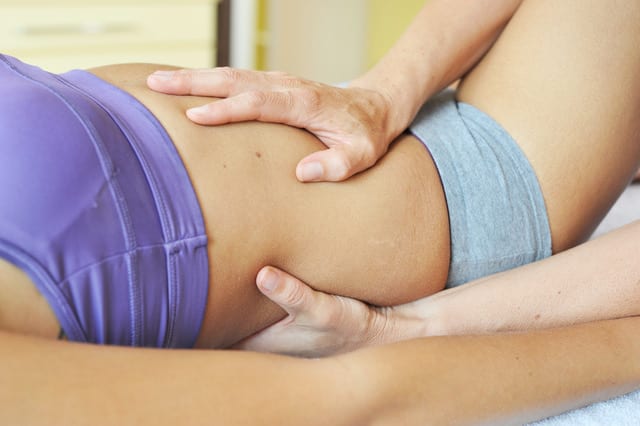
Osteopathy addresses these restrictions first. By restoring mobility in the thoracic spine, ribs, and pelvis, it creates the conditions for more effective rehabilitation.
The Role of the Diaphragm in Postpartum Recovery
A key but often overlooked element is breathing.
The diaphragm, pelvic floor, and abdominal muscles form a pressure system. When one part is not functioning properly, the entire system is affected.
After pregnancy:
- Breathing often becomes more apical (chest-based)
- Intra-abdominal pressure is poorly managed
- The pelvic floor may be overloaded or under-recruited
A 2016 review in the Journal of Women’s Health Physical Therapy emphasized the importance of restoring diaphragmatic function to improve pelvic floor outcomes.
In treatment, osteopathy can:
- Improve rib cage mobility
- Reduce tension in the diaphragm and surrounding fascia
- Help normalize breathing patterns
This has a direct impact on core stability and can reduce symptoms such as pelvic heaviness or lower back pain.
Cesarean Section: More Than Just a Scar
C-section recovery is often approached from a healing perspective only. However, scar tissue can create mechanical restrictions that extend beyond the local area.
Scar adhesions can affect:
- Fascial continuity between the abdomen and pelvis
- Hip mobility
- Spinal mechanics
Some patients report symptoms that seem unrelated, such as pulling sensations, reduced trunk rotation, or even persistent back discomfort.
Manual therapy has been shown to improve scar mobility and reduce associated pain. While research is still developing, clinical observations consistently show that improving tissue glide around the scar can restore more natural movement patterns.
Why Symptoms Sometimes Appear Later
A common situation is delayed onset of symptoms.
A patient may feel relatively fine in the first few weeks, then develop pain months later. This is often linked to a progressive increase in physical demands—lifting, carrying, returning to exercise—on a system that hasn’t fully regained its baseline function.
In other words, the issue was present early on, but only becomes noticeable when load increases.
This is why early assessment can be useful, even in the absence of strong pain.
A More Targeted Approach to Recovery
Osteopathy does not replace physiotherapy or exercise-based rehab—it complements it.
The goal is not to “treat everything,” but to identify specific restrictions that limit recovery. In many cases, addressing a few key areas can significantly change how the body responds to movement and exercise.
This includes:
- Restoring pelvic and sacroiliac mobility
- Improving thoracic and rib cage movement
- Reducing unnecessary muscular tension
- Supporting better load distribution through the body
The approach is always individualized. Two patients with similar symptoms may require very different interventions depending on their movement patterns and history.
When It Makes Sense to Consult
You don’t need severe pain to benefit from treatment. In fact, some of the best outcomes happen when issues are addressed early.
You may consider osteopathy if you notice:
- Persistent or recurring lower back or pelvic discomfort
- A feeling of instability despite doing core exercises
- Neck or shoulder tension that worsens with daily activities
- Difficulty returning to sport or training
- Unusual pulling or restriction after a C-section
These are often signs that the body is compensating rather than fully recovering.
Postpartum Care in Vancouver
In a city like Vancouver, where many patients aim to return quickly to an active lifestyle, addressing these issues early can make a significant difference.
At Urgent-Osteo, care is provided by Neal, with sessions that are focused, one-on-one, and adapted specifically to postpartum recovery. The emphasis is on practical outcomes: reducing pain, improving movement, and helping you return to your normal activities with more confidence.
Flexible scheduling and direct billing options are available.
Take the Next Step
Postpartum recovery is not just about time—it’s about how well the body regains its function.
If something doesn’t feel right, or if progress has plateaued, it may be worth looking at the mechanical side of recovery.
Book a session with Neal at Urgent-Osteo and get a clear, personalized approach to your postpartum recovery.