

Slipped on Ice in Montreal? What to Do for Your Back, Tailbone and Wrist
If you just fell on ice and something hurts, check for red flags first: severe pain, an obvious deformity, a blow to the head, numbness or weakness. Any of these means a doctor or the ER, not an osteopath. Without them, most pain after a slip on ice comes from muscles and joints. Ice, gentle movement and a few days of patience usually help, and if pain or stiffness lingers, an osteopath can help you move comfortably again.
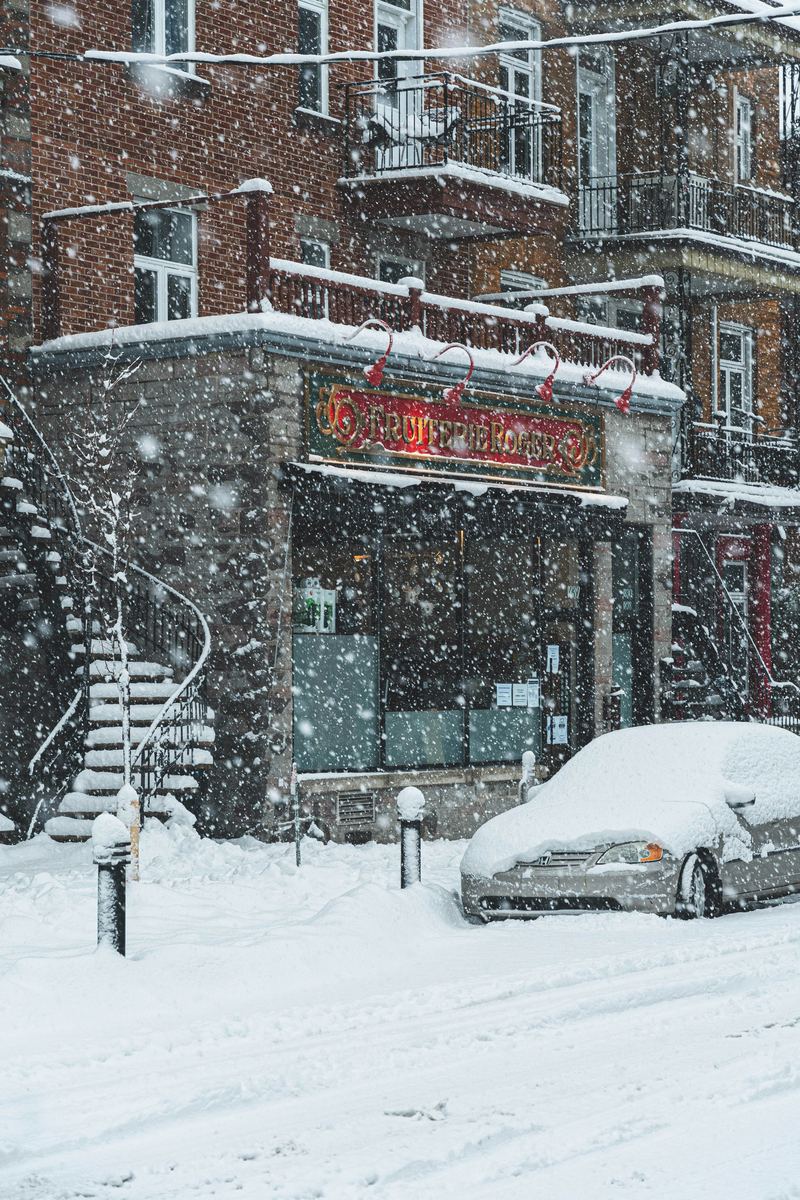
Every November and December, the first snowfalls and freezing rain turn Montreal sidewalks, from Mile End to NDG and Verdun, into skating rinks. Here is what to do, step by step.
Common injuries after a fall on ice
Most people fall backwards or sideways and try to catch themselves with a hand. The areas that take the hit are usually:
- Tailbone and lower back: landing on your bottom, pain when sitting or getting up.
- Wrist and shoulder: the reflex of breaking the fall with an outstretched arm.
- Neck: a whiplash-type jolt, with stiffness that often shows up the next morning.
- Ankle and knee: a twist as your foot slides out.
- Hip, especially in older adults.
What to do right after you fall
- Don’t jump up. Take a moment to check you can move your arms and legs without sharp pain.
- Get up in stages: roll onto hands and knees, then push up from one knee using something stable.
- Use cold on the sore area (ice wrapped in a cloth, 15 to 20 minutes, several times a day) for the first 48 hours.
- Keep moving gently. Bed rest rarely helps back pain. Walk a little, and skip heavy efforts such as shovelling for a few days.
- For a sore tailbone, a donut cushion or sitting slightly forward often takes the pressure off.
- Watch how it evolves over 24 to 48 hours. Pain that gets worse instead of better needs a professional opinion.
Not sure? A nurse at Info-Santé 811 can advise you 24/7.
When to see a doctor or go to the ER
Call 911 or go to the emergency room if you have:
- hit your head and then have a worsening headache, vomiting, confusion or unusual drowsiness (especially if you take blood thinners);
- a visible deformity, major swelling, or you cannot move your wrist, shoulder or ankle;
- trouble standing or walking, or sharp hip pain;
- numbness, tingling or weakness in your legs or arms;
- loss of bladder or bowel control;
- chest pain or difficulty breathing.
For older adults or anyone with osteoporosis, significant pain after even a minor fall should be checked by a doctor to rule out a fracture. An osteopath does not replace that medical assessment; osteopathic care comes once serious injury has been ruled out.
When to see an osteopath after a fall
With no red flags, book an osteopath if, a few days after your fall, you still have:
- tailbone pain that makes sitting uncomfortable;
- lower back pain or stiffness that limits your movements (see our article on lower back pain);
- a stiff neck or tension headaches that started after the fall;
- shoulder or wrist discomfort once a fracture has been ruled out.
Your osteopath starts by asking how you fell and about your health history, and checks for anything that would require a medical referral. Treatment then uses gentle manual techniques on the areas that absorbed the impact: pelvis, spine, rib cage and neck. The aim is to ease tension, restore mobility and help you get back to your routine. If imaging or a medical exam seems necessary, you will be referred.
At Urgent-Osteo, you can be seen the same day at our clinic on Saint-Joseph Boulevard East in the Plateau, or at home anywhere on the island of Montreal, the North Shore and the South Shore. That helps when sitting in a car or walking on icy sidewalks is the last thing you want to do. Seniors can also read about our osteopathy for older adults.
How to avoid slipping on ice this winter
- Wear boots with non-slip soles and add removable ice cleats on icy days, as recommended by Québec.ca.
- Walk like a penguin: short steps, flat feet, knees slightly bent, weight over your front foot.
- Keep your hands out of your pockets so you can balance.
- Take extra care on metro exits and Montreal’s famous outdoor staircases, and hold the railing.
- After a storm or freezing rain, postpone non-essential outings if you can.
FAQ
How long does tailbone pain last after a fall?
A bruised tailbone often improves over a few weeks, but recovery time varies from person to person. Pain that does not ease, or gets worse, should be assessed by a health professional.
Do I need an X-ray before seeing an osteopath?
Not always. If you have red flags or a fracture is possible, see a doctor first. Otherwise, your osteopath will assess you and refer you if an exam is needed.
Can I see an osteopath the day after my fall?
Yes, as long as there are no red flags. The session is adapted to your pain level and uses gentle techniques.
Does Urgent-Osteo offer home visits after a fall?
Yes. Our osteopaths visit patients at home across the island of Montreal, the North Shore and the South Shore. See our emergency osteopathy page.
Book an appointment
Slipped on ice and the pain won’t settle? Book online for a same-day appointment, in clinic or at home. Our Montreal clinic has more than 1,000 Google reviews.
About the author — Jugurtha Boumali, founder of Urgent-Osteo, a network of osteopathy clinics in Montreal and Vancouver.
This article is for information only and does not replace medical advice.